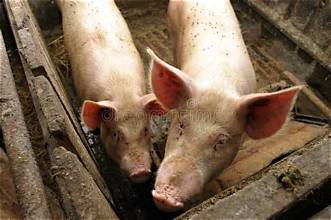
A section of wooden fence placed at an angle allowed people to be one step inside the pen to feed and check on the animals but not get their feet dirty in the muck that would quickly develop after a few days. I stared at the two lumpy looking, rather furless animals. My brother Billy asked, “What names should we give them?”
The animals made snuffling noises with their rubbery snouts. Unlike large-eyed Disney princesses, they had ridiculously small eyes fringed with blond lashes. I didn’t see them as endearing and felt no remorse at all knowing that when fall arrived, we would butcher them so we could have pork and sauerkraut meals, bacon for breakfast and breaded pork chops. I suggested, “They look like they’re up to no good. We should call them Bonnie and Clyde.”
The small building beside the machine shed where Bonnie and Clyde lived that summer frequently changed its purpose. Before reaching my teen years, I knew it as a chicken pen, goat hut, heifer lounge, and a pigsty. A row of windows on the south wall let in light. A door on the west wall allowed a person to enter to feed the animals. A door on the east wall allowed the animals to go outside to enjoy fresh air in a sheltered, fenced-in area behind the machine shed.
The pigs loved to eat, and it seemed like they ate everything, not only the pig feed that Daddy provided, but all the kitchen scraps that Mom put in a bowl for me to carry across the yard to them each evening. It took Bonnie and Clyde only a few minutes to chow down half-eaten hotdogs, broccoli stems, apple cores, potato peels, and fat cut off a beef roast.
Outside, beneath the south-facing windows, grew huge clumps of rhubarb, no doubt liberally fertilized through the years by a large variety of animal dung. In the spring, before returning the empty bowl to the kitchen, I’d yank out a stalk. Some of the stalks were as large as my wrists, and I loved dipping them into sugar and eating them!
As the days passed and the summer slowly blossomed, the nearby strawberry patch yielded huge, red, sweet berries. A row of cherry trees along the strawberries provided cherries for pies and the garden kept Mom busy canning. Meanwhile, Bonnie and Clyde grew fat. I sometimes watched them rooting in the soil behind their shed. Some days they were covered with dust, on rainy days they wallowed in muddy puddles. They seemed so happy, snuffling, grunting, oinking and making horrible squealing sounds when they fought over a tasty find in the mud.
We named many of the animals that we ate. Some of my brother’s cows had names like Bramsie, who was a Brahman-Holstein mix, and Beastie, who was the 666th calf born on the farm. Other cows just had numbers for a name, like “Number 34”. She was very tame milk cow and not at all skittish. After she was butchered, my brother Billy would sometimes say during supper, “Good old ‘Number 34’ sure tastes good.” I nodded, enjoying the tender meat.
Being a farm kid, eating cows, chickens or pigs that we raised didn’t bother me at all, probably because it was an expectation right from the beginning. I understood that these animals were there for our benefit.
Some people might have more of a problem with the fact that many farmers also on occasion do eat “downer” cows. These are cows that suddenly and unexpectedly get injured and are immediately butchered. In certain circumstances, it is the right thing to do! When my husband, Arnie and I farmed, we had an older milk cow named Daisy. As she aged, we started to call her, “Grandma”. One day while the cows came into the barn to be milked, “Grandma’s hooves slipped and she fell on the wet alleyway. She was unable to get back up because the fall broke her hip. Unfazed and seemingly not in any pain, she ate feed from my hand and chewed her cud. Losing her from our milk herd was a great loss, but we needed meat in our family larder. Arnie and I quickly decided to butcher her and have all her meat ground for hamburgers.
People who have no farm-life background might be horrified to read what I’m saying, but every bite of meat that people eat was once a living creature that had a name or number assigned to them. Living on a farm just ensures that you know they were well taken care of and well fed. Not only did I know “Bonnie and Clyde”, “Bramsie”, “Beastie”, “Grandma” and “Number 34”, but I have also eaten them!

