Archives

It’s All Fun!

Our tour of Quebec was on a sunny day. Tammie sat on the top deck. The view from there was excellent, but unfortunately she was painfully sunburned!

Tammie pulled out her phone to take notes, and I had a tablet when we sat down across from each other in the living room. My daughter stated, “Let’s get this all figured out tonight, because shore excursions filled up really fast before our last cruise.” I did remember. There had been some excursions that were fully booked by the time we looked at what we wanted to do!

I also remembered that we had managed to schedule shore excursions at each port of call. The things we saw and did were fun, but when our ship pulled out of dock, I wished that Tammie and I would have had time to visit the town built around the port. Also, the cost of all those shore excursions had doubled the cost of my cruise.

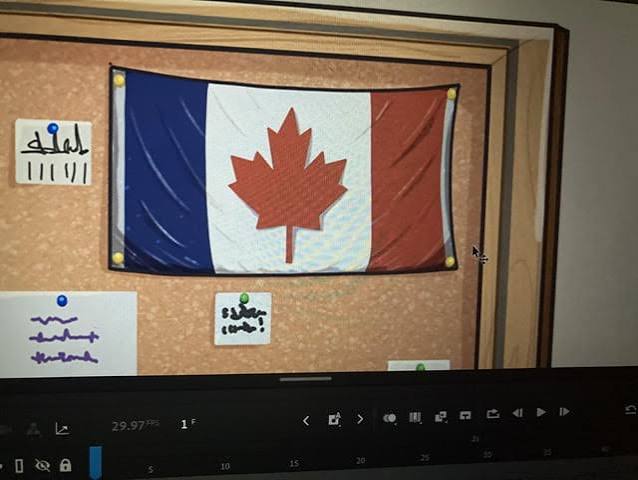
That night, Tammie and I agreed that the only excursion we really wanted to go on was the one that would show us where the story about Anne of Green Gables took place.

Three months before taking this cruise, I had had my right hip replaced. Walking suddenly felt good again. While aboard ship, I surprised myself by walking a few laps around the promenade deck with my daughter, Niki. Although walking was painless, I was out of shape. Our first port of call on Sunday morning was Portland, Maine. Tammie said, “The church where we will attend Mass is just a few blocks from the dock.” What I failed to remember or maybe didn’t realize was that the distance was all uphill! I wasn’t used to that type of energetic walking.

We stopped often and rested along the way. When we arrived at the church, we were told, “Because today is Corpus Christi, Mass will take place at the Cathedral of the Immaculate Conception.” He pointed uphill and said, “It’s just a block or two up that street.”

In Halifax, we bought tickets for a Hop-On, Hop-Off bus. This line of ancient, double-decker buses had a set route through the city, stopping at several places of interest. By the time we finished going through the Halifax maritime museum, we only waited five minutes for another bus to roll up.

Continue reading

Anne of Green Gables

Blindingly bright afternoon sunshine streamed through the large western window into my living room. I pulled the drapes shut. The afternoon was warm, and my old brick farmhouse could retain coolness for most of the day if Istopped the sunshine from coming in and toasting the living room carpet. The sweet aroma of baked chocolate chip bars filled the air.

While transferring laundry from the washer to the dryer, I heard the back door of the house slam. My daughters were home. My husband, Arnie, would soon be home, too. I congratulated myself on good timing. The dessert bars were cooling on the counter, and the family supper would be ready in about an hour.

I walked into the living room with a basket of laundry that needed to be folded and found my twelve-year-old and sixteen-year-old daughters lying on the living room floor watching ‘Anne of Green Gables’ on television. Sitting down on the sofa, I pulled the laundry basket closer to me. Tammie popped up at my knee and asked, “When will we be having supper? We want a chocolate chip bar!”

Shaking the wrinkles out of a pair of jeans, I admitted, “I couldn’t resist eating a small wedge of it when it was fresh from the oven. We won’t eat for another hour. Cut a small serving for yourselves. I doubt it’ll ruin your appetites.”  Pausing the VHS tape, Niki and Tammie jumped to their feet and ran into the kitchen.

Buying the ‘Anne of Green Gables’ VHS set with Meghan Follows as Anne, had been a wise decision. My daughters watched the series repeatedly. I loved watching it with them. Both daughters swooned over good-looking Gilbert Blythe. They became frustrated with how Anne Shirley treated him. We all laughed when red-haired Anne smashed her school slate over Gilbert’s head when he called her ‘Carrots’. Anne did many foolish things like confusing a jar of raspberry juice with raspberry cordial. As a result, her greedy ‘bosom friend’, Diana Barry, got very drunk. We cried over sweet, gentle, Matthew’s death and Marilla regretting her decision as a young woman that ended her relationship with John Blythe.

Continue reading

Mid-West Gourmet

Escargot, a.k.a. snails

The hostess led me, my daughters, and granddaughter though the busy dining room to an empty table. Outside the many dining room windows that lined the huge room, we could see choppy, blue-gray water rushing past our ship, the MS Zuiderdam. We had left port hours ago, and were now traveling through the open, northern Atlantic Ocean.

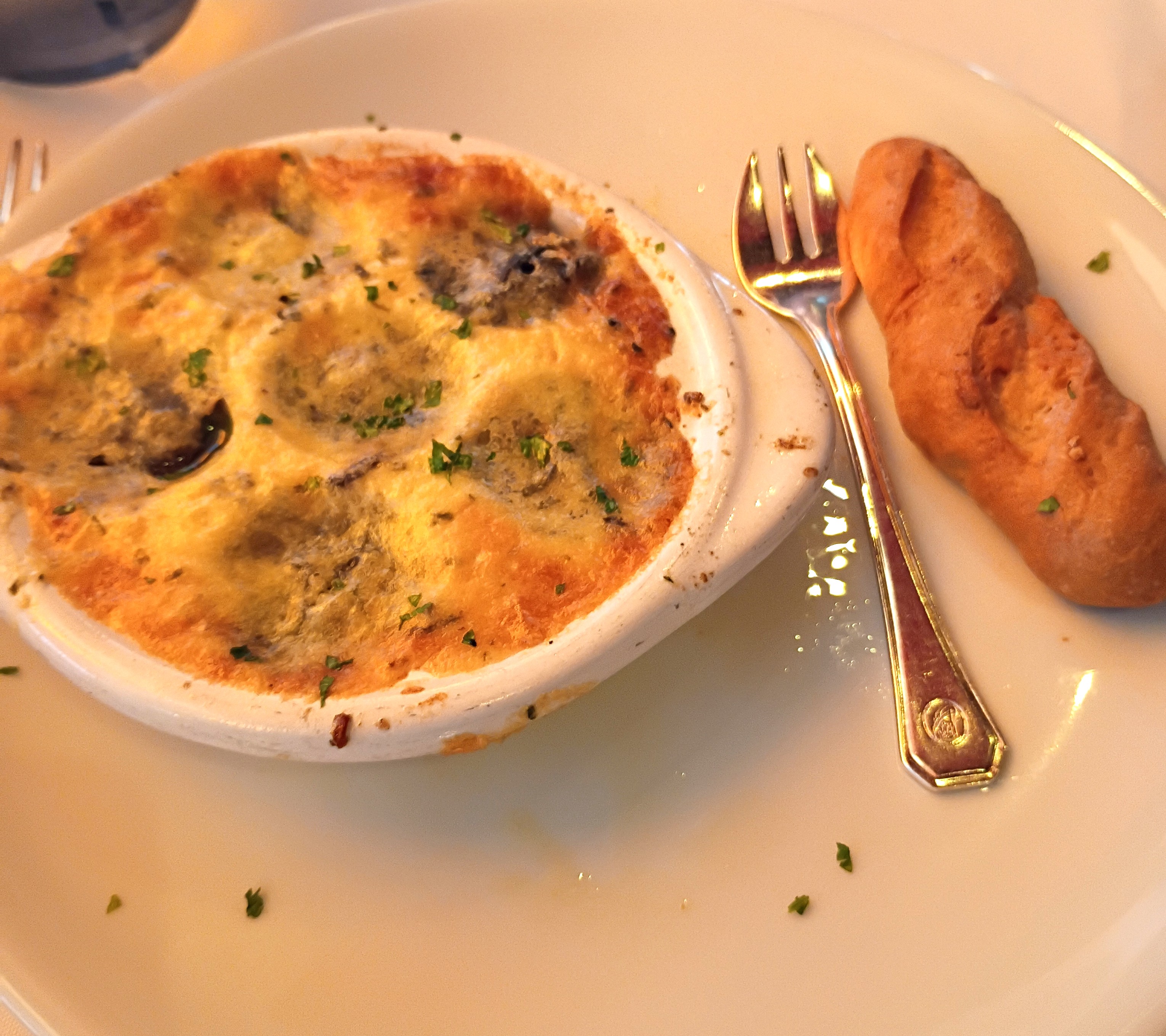
Once seated, and with cloth napkins spread open on our laps, our waiter handed us menus. The starters listed that evening were jumbo shrimp cocktail, tomato and red bell pepper bisque, escargot Bourguignon and lentil Tabbouleh salad with feta. I ordered, “The escargot, please.”

I knew what I was ordering. My appetizer that evening would be snails floating in garlic butter, accompanied by a four-inch-long bun that looked like a small loaf of French bread. Many people refuse to eat escargot because they think they would be slimy and disgusting. I discovered that the little snails are delicious, and not slimy at all! I ordered escargot twice on my most recent cruise.

Having grown up on a dairy farm, I know where milk, cheese, butter and ice cream comes from and how it is made, but when I got home from my trip, I started to wonder if there was such a thing as a snail farm. I knew I had to do some research after a person asked me, “Was the escargot slimy? Because, after all, a snail is just a garden slug that wears a shell.”

Continue reading

Know Your Neighbor

Rain splattered against the kitchen window. I peered through rivulets streaming down the screen. Water-logged trees and bushes in my backyard were whipping back and forth in strong gusts of wind. Feeling chilled despite the warmth of a summer afternoon, I picked up my sweater from the kitchen chair and pulled it on. I felt bored and restless. There were plenty of household chores that I could do, but I didn’t feel like doing them. 

My daughter, Tammie, was sitting on the sofa in the living room busily doing a Japanese thread craft called kumihimo. I glanced around at the dim lighting and turned on a lamp. Chuckling, I said, “I’m turning into Grammie Altmann. Do you remember how she’d always tell us to turn on the lamps because doing close-up work in poor lighting would ruin our eyes?” 

Holding up the braid she was working on for me to admire, she admitted, “Maybe it’s because I’m getting older, but I’m starting to understand where she was coming from. My eyes feel a little less strained when the light is on.” 

Pulling the drapes shut and turning on another lamp, I complained, “I feel bored. There are plenty of things I could do, even fun things like working on my latest jigsaw puzzle, but I don’t feel like doing any of it.” Sinking down onto my favorite chair, I pointed the remote at the television and turned it on. Flipping from one channel to the next, I quickly concluded that there wasn’t much that was interesting to watch.  

One channel featured a reporter standing on a busy, big city, street corner, asking people passing him to answer some basic questions. Curious, I paused my channel flipping. The reporter asked a young woman which country was north of the United States.  She frowned, scratched her head and after a long pause uncertainly questioned, “Ummm. Alaska?” My daughter and I exclaimed in disbelief. 

Other questions the reporter asked were just as simple. He asked, “How many eggs are there in a dozen?” “How many quarters would you need to have two dollars?” “How many ounces are there in one cup, one pint, one quart?” “What country borders the USA to the south?” No one gave the correct answer to any of the questions.  

I exclaimed, “Don’t people learn any of these things in school anymore? This show makes me wonder. At the hospital, to determine if a patient is confused, nurses often ask patients questions like, ‘who’s the president of the United States?’ If someone just doesn’t know, does that mean they are confused?” 

Continue reading

Vacation food

Our daughters had wandered away to play in the living room when they finished eating. My husband and I continued to sit at the table discussing our plans for the rest of the day. Arnie told me where he was going and what time he’d get back home. My response was, “What would you like for supper tonight, hamburgers in mushroom gravy or chicken?”

Arnie turned to look at me with a startled expression on his face. He exclaimed, “My gosh, woman! Don’t you ever stop thinking about food? We just finished eating a meal and now you’re already thinking about eating again!”

I responded indignantly, “Do you somehow think that the meals I make are whipped up in half and hour with no planning? The meat is frozen. It needs to be thawed out. Then it must be prepped and roasted or fried long enough for it to get done!”

To be fair, the only ‘meals’ that my husband ever made were fried eggs, fried freshly caught fish or cheese and sausage sandwiches that he hastily slapped together during a commercial. The ingredients Arnie needed to make these meals were always magically found in the kitchen when he wanted them. He didn’t seem to recognize that it took planning ahead on my part when buying groceries.

Shortly after our daughter, Niki, was married, she commented one day to me about how hard it was to constantly make meals. I knew what she meant. Making one meal is easy, but looking ahead to making a lifetime of meals is intimidating.

Through the years, Niki became a pro at planning and making meals for a large family. Every summer, she takes a vacation with her children. Since eating every meal at restaurants would be very expensive, my daughter makes meals ahead, freezes them, and packs them in ice-filled coolers. Motel room kitchenettes are small and inconvenient, but she manages to provide her children with good, home-made vacation food.

My other daughter, Tammie, and I took a cruise last year. When we got home, we talked non-stop about the wonderful meals that we were served aboard the ship. This year when the opportunity for us to take another cruise came up, I invited Niki to join us. She accepted the invitation and commented she couldn’t remember when she last took a vacation that didn’t require her to make meals ahead that had to be frozen and packed in an icebox.

Continue reading

Countdown

My daughter Tammie cheerfully announced, “Our cruise ship will be leaving the dock in seven days, eight hours and thirteen minutes.” Looking down at the cruise ship’s navigator app in her phone, she questioned, “Have you looked at the dining room menu? What would you order if you were on the ship today?”

I complained, “The closer we get to leaving for the cruise, the more anxious I feel. I feel like a child waiting for Christmas Eve and Santa’s visit.”

“That’s wonderful, isn’t it?” exclaimed my daughter, like a true high school cheerleader.

Frowning, I slowly shook my head no and explained, “When you and your sister were little, the last few days before Christmas was painful. Your anticipation and hopes made you emotional, anxious little people, which made me feel sad. The holiday was supposed to be fun. Instead, you wished away all the days and the fun things we could do leading up to Christmas. You just wanted that one day to arrive.”

Holding up her phone for me see the screen, Tammie asked, “Doesn’t looking at the navigator app make you think about the fun things we will get to do, to see, to experience?”

I insisted, “The app does make me think about all those things, but since I can’t do them until we get to the ship, I feel like I am spinning my wheels and getting nowhere. I feel like I am wishing my life away.”

The phrase, ‘wishing my life away’ made me think of my mother. When I was in third grade one evening before Christmas, I lamented to my mother how I didn’t like waiting for Christmas Eve and wished it would hurry up and come. My fifty-five-year-old mother’s sage advice was, “Don’t wish your life away.”

Continue reading

Hung-Up on Hangers

Stepping back, I scanned the closet with satisfaction. I’d drastically reduced the contents which had been hidden for so many years behind its two 1970-style folding doors. There were two piles of closet contents on the bedroom floor behind me. One pile would be gathered up and placed in the garbage. The other pile would go to Saint Vincent de Paul as a donation. All that I had left in the closet was sorted and neatly stored in boxes.

When they were little, my two daughters shared the bedroom with this closet. I smiled, remembering one summer in their childhood. I would tuck them into bed each night and they never failed to request that I shut the closet doors. When I asked them why having the closet doors ajar bothered them, they explained that a giant frog holding a huge trident was in that closet at night. They didn’t sound scared but were insistent that the doors be closed.

Before shutting the doors on the newly cleaned closet, I gave it one last satisfied glance. Something I hadn’t noticed before suddenly came into focus: high in the closet, all shoved to one end, hanging on a mounted water pipe was a huge collection of wire clothes hangers. I’d stopped hanging clothing in this closet years ago but kept the wire hangers.

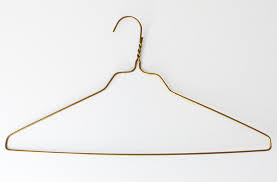
There were two different types of hangers. One third of them had spring-loaded clips on each end, which was ideal for hanging skirts or pants. They were good, sturdy old-fashioned hangers made to last. The rest of the clothes hangers were all made of heavy gauge wire. No matter how heavy a coat is, the weight wouldn’t make the wire bend.  I couldn’t bear to throw any of them out. You can’t buy new ones of this quality anymore!

Later that day, I started to think about my obsessive determination to keep the old-fashioned clothes hangers. On a recent visit to a store, I’d seen sturdy plastic clothes hangers in various colors. It made me wonder if people color-code their wardrobes or match the hanger colors to their bedroom walls. Clothes hangers certainly aren’t hard to replace.

Continue reading

Another Dam Ship

I frowned and requested, “Say that again. What is our cruise ship’s name?”

My daughter Tammie, who plans, organizes, schedules and purchases tickets for all our vacations, repeated and explained, “It’s called the Eurodam. The ship belongs to the Holland America Cruise Line.”

We had never taken a cruise for a vacation before, so I didn’t know what to expect. I doubted the experience would be like the 1980’s television show “Love Boat,” and I hoped it wouldn’t be like some of the cruise stories I’d had people tell me about: the ship being one huge, non-stop floating buffet.

Tammie and I started to explore the possibility of taking a cruise vacation because I like traveling and visiting different places, but dislike packing and unpacking as we move from one hotel to the next. I wanted a vacation where I could visit several cities while staying in one place. Our cruise to Alaska and back through the inside passage checked all the boxes on my ‘want list.’

Our cabin in the Eurodam matched a typical hotel room: well-appointed and stocked with everything we would need. Unlike a hotel room, our cabin also came with a cabin steward. The steward seemed to materialize out of thin air shortly after we stepped into our cabin. He introduced himself and asked if we needed anything.

 Cabin stewards clean and service the cabins assigned to them. It was like having a guardian angel watching over us. We never had to ask for extra towels, and on more than one occasion we found them on the bed, folded to resemble an animal such as a dog or elephant. While smoothing the wrinkles out of the bed sheets, he occasionally left chocolate candies on the pillows. Each morning, he left that day’s activity itinerary and dining room menu in the mailbox next to our door.

Instead of packing and unpacking while the ship carried us from one city to the next, we attended presentations, activities, and recitals. When we wanted to relax, we took advantage of a small library and lounge chairs in the ship’s Crow’s Nest Lounge.

Continue reading

OCD Me

Lifting a gallon of milk off the grocery store’s refrigerator shelf, I turned to put it in my cart when I came face-to-face with a nurse that I had worked with a few days before. Rosie had a toddler with her and a baby sitting in her shopping cart. Delighted to see her, and for a chance to introduce her to my daughter, Tammie, I glanced at my grade school daughter and said, “Tammie, this is the nurse I told you about. Rosie, this is my daughter, Tammie.”

They shook hands. We had a lovely visit, but soon went our separate ways as Rosie’s baby began to fuss. Rosie and Tammie were both born with TAR syndrome, causing them both to have elbow-length arms. Tammie’s hands sharply angled in, while Rosie’s did not.

On our way home from the grocery store, Tammie had many questions. The first, “Why are her hands so different than mine?” I explained that some people with TAR syndrome have surgery on their hands to ‘centralize’ them, which I suspect gives them a farther reach.

I began to tell Tammie that Rosie had seven siblings and that she had one sister who also had TAR. She and her sister never needed blood transfusions, nor surgeries to correct lower extremity deformities. My daughter wondered, “How can that be for someone with TAR?”

My explanation that evening became an often-repeated maxim, “All illnesses, syndromes and tendencies are experienced by people on a one to ten scale.” I tried to explain that what one person experiences with an illness or disability isn’t what everyone experiences.

In my mind, Rosie and her sister had TAR on the scale of maybe three or four. Tammie with all her blood transfusions and leg surgeries, had TAR on the scale of about six or seven. We also knew a boy with TAR who had hands coming out of his shoulders and was never able to walk independently. For those extra challenges I felt his experience of TAR had to be at least a nine on the scale of ten.

Continue reading

Fighting For Control

The vase on the left is the new one. The one on the right was made in Door County.

Tammie parked her car and turned to me and asked, “Are you excited about our class?” A hot, midsummer sun baked the Door County parking lot.

Not sure how to answer, I wrinkled my nose and shrugged before finally admitting, “I wouldn’t describe how I feel as excited. I feel more nervous than anything, because I want to do well, but I don’t know if I have what it takes.”

 Inside the pottery shop next to the parking lot, we found our instructor preparing a pottery wheel and gathering supplies for our appointment. My daughter had arranged this class for us because I wanted to experience using a pottery wheel. Making one clay bowl wouldn’t make me an experienced potter, any more than watching brain surgery on television would qualify me as a brain surgeon, but I wanted to feel damp clay and make something beautiful.

Our teacher was in his fifties, had a bushy, salt and pepper beard and a durag tied around his head. His clothing was spotted with dried clay and paint. Shelves on both sides of the narrow room were full of different types of clay, paints, and other supplies. Next to the pottery wheel was a water faucet and below it, a drain in the floor.

After greeting us, our instructor handed us plastic aprons to wear, then went back to work. He explained, “Properly centering clay on the wheel takes a lot of practice. Since this is a onetime class, I’m doing it for you.” After demonstrating how to sit at the wheel, he explained that it was very important to keep our hands wet as we worked with the clay.

Tammie and I took turns at the wheel. Frequently dipping our hands into a bowl of water and a lot of assistance from the instructor we each managed to make an unremarkable small bowl. Before taking my last turn at the wheel, I commented, “I’d really like to make a small vase.”

Continue reading