The hostess led me, my daughters, and granddaughter though the busy dining room to an empty table. Outside the many dining room windows that lined the huge room, we could see choppy, blue-gray water rushing past our ship, the MS Zuiderdam. We had left port hours ago, and were now traveling through the open, northern Atlantic Ocean.
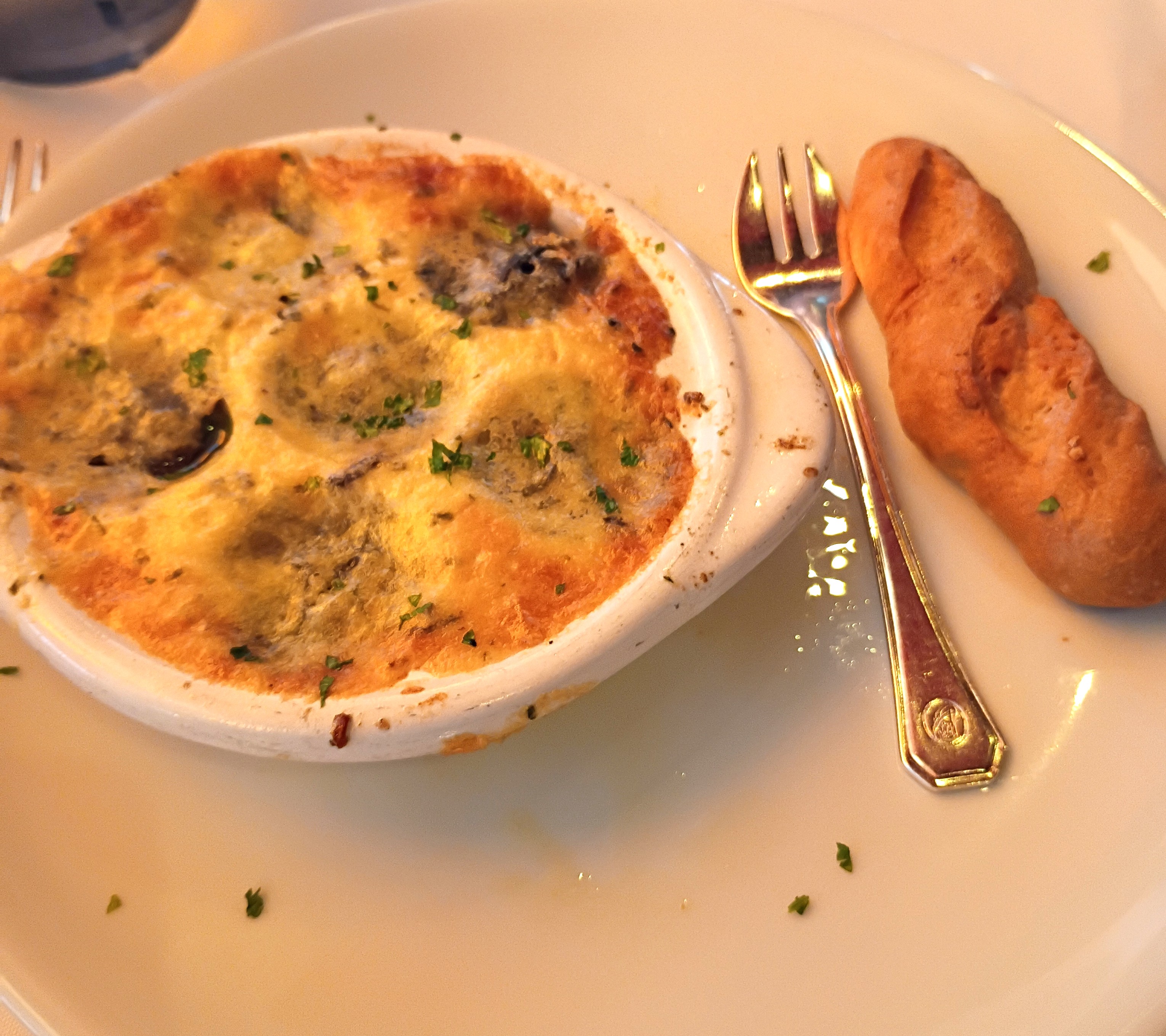
Once seated, and with cloth napkins spread open on our laps, our waiter handed us menus. The starters listed that evening were jumbo shrimp cocktail, tomato and red bell pepper bisque, escargot Bourguignon and lentil Tabbouleh salad with feta. I ordered, “The escargot, please.”
I knew what I was ordering. My appetizer that evening would be snails floating in garlic butter, accompanied by a four-inch-long bun that looked like a small loaf of French bread. Many people refuse to eat escargot because they think they would be slimy and disgusting. I discovered that the little snails are delicious, and not slimy at all! I ordered escargot twice on my most recent cruise.
Having grown up on a dairy farm, I know where milk, cheese, butter and ice cream comes from and how it is made, but when I got home from my trip, I started to wonder if there was such a thing as a snail farm. I knew I had to do some research after a person asked me, “Was the escargot slimy? Because, after all, a snail is just a garden slug that wears a shell.”
Was she right about a snail being a garden slug that wears a shell? I decided to study the topic. I discovered a lot of information. At one time snails were considered poverty food. Starving people could collect them from any yard or roadway during the rainy season, usually from April through June. Thanks to haute cuisine, escargot is now considered a delicacy. Since snails are now most often farmed-they are no longer a seasonal item on the menu. The people in France consume the most escargot in in the world.
Raising snails for consumption is called heliciculture. Not all snails are suitable for eating because of size and their diet. The snails most used and farmed are the Helix Domatia, Cornu Aspersum and Helix Lucorum.
Slugs and snails share many similarities; they belong to the Gastropod class and phylum Mollusca. The two both leave trails of slime wherever they go, have tentacles, and broad, singular, flat bottomed muscular foot.
The part of the snail we eat is its foot. The meat must be fully cooked to prevent illness due to parasites or bacteria. Farmed snails are much less likely to be contaminated. While snails are enjoyed by most diners, people who have tried eating slugs say they don’t taste good. Also, slugs don’t become tender with cooking as do the snails. Another difficulty in preparing a slug for cooking is washing the slime off its foot. Slugs have slime that is much thicker than a snail, and it is difficult to wash off the meat.
Diet impacts flavor and texture of the meat. Snails eat vegetation like leaves, flowers and fruit. Farmed snails are often fed specific diets to improve their flavor. Slugs on the other hand consume decaying matter, fungi and animal feces and live in environments that increase the possibility of contamination.
In 2010, an inebriated young man in Australia accepted a dare to swallow a slug that one of his friends found crawling on a plant alongside the sidewalk. The slug carried a type of round worm that gave the slug-swallower rat lungworm with led to eosinophilic meningitis. The man was in a coma for many months. When he woke up, he was paralyzed. Because of this one poor decision, the man died of complications nine years after taking the dare. I was horrified by this story. I will stick to eating chef-prepared snails, thank-you!
My answer to the all the people who asked me if escargot is slimy, my answer is a solid, “No.” I can’t really describe the texture of a snail, though. Nor can I fully describe what they taste like. All I can say with complete certainty is, the escargot I enjoyed on the cruise was a fantastic transport vehicle to get buttery deliciousness into my mouth.
 Life Lines