Listening to the radio while getting ready for the day, I heard a man asking a radio talk show host if using A I (artificial intelligence) was a form of plagiarism. This piqued my interest. As a writer, I don’t want anyone to attempt to pass off my writing as their own or have anyone to think my work is generated by AI.
I could understand why the caller asked this question since I know that AI content is generated by patterns in existing data and established thoughts by original authors. AI’s electronic brain can quickly and easily imitate any writing, artwork or video faster than any human.
Is using AI a form of plagiarism? AI in my computer said that if A I content is used in anything, to avoid any suspicion of plagiarism it needs to be edited, cited, or clearly labeled as a standing book point for original work.
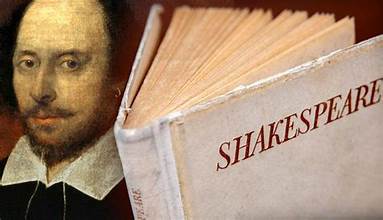
Can AI be as clever and inventive as people? For some souls, it might be a neck-to-neck race. But if we put AI up against a writer like William Shakespeare, there is no doubt that AI electronic synapsis will come up with work that sounds like Shakespeare, but without Shakespeare’s skill at feeding the English language new words.
Many articles that I’ve read about William Shakespeare point out that he used more than 20,000 words in his plays and poems. As many as 1,700 of those words were never used in the English language up to that time. The English people in the 1600’s mentally chewed on the new words Shakespeare used in his plays and poems, working out whether to continue using them…or not.
Like a mad scientist, Shakespeare threw together words, many already existing but never before paired up, like bed and room, or eye and ball. The word pictures he produced with the combinations increased audience enjoyment.
To some words, Shakespeare attached prefixes or suffixes. Fashion became fashionable, changing a generalized description of apparel to describe clothing that is attractive and popular. He added the word ‘in’ to ‘audible’ and the world learned what to call voices we hear but can’t make out.
Without Shakespeare, what would we call the practice of lovers touching their lips together? He gave us the word ‘kiss.’
The word neologism, or coinage, describes what happens when new words become so popular and are widely used, and are eventually included in dictionaries. There are six different routes words take to achieve this.
Acronyms sometimes become words; think snafu. This odd word comes from the second world war era and stands for ‘situation normal, all (fouled) up.’
Foreign words have often been adopted by the English language with little or no changes to them, such as: ‘ballet.’
In the USA, states like Wisconsin have many words and place names that are derived from the words Native Americans used. The way these words are pronounced now don’t sound anything at all like they started out!
Portmanteaus are words combined to arrive at a new meaning, such as when a meal is neither breakfast or lunch, it becomes ‘brunch.’
Names can become words to describe situations, such as ‘boycott.’ We can thank an Irishman, Captain Charles Boycott for that one. He was such a disliked person that his name became a shorthand reference for how the community shunned him.
Some new words are just simply made up, such as blurb, gimmick, quark, nerd and widget. And of course, my all-time favorite: tattarattat (the sound of someone knocking on a door), which according to James Joyce, is English’s longest palindrome, a word spelled the same way forward as backwards.
This world needs a good word to describe the rising flood of content produced by Artificial Intelligence. Currently it is called things such as generative AI, automated content, machine generated material and even, AI slop. These names are descriptive, but boring. We must do better than this! Ask yourself, what word would Shakespeare come up with? Digested Intelligence? E-Thoughts?
 Life Lines