I climbed the worn and weathered wooden stairs to the ancient shed’s second floor. Three of my neighborhood cousins who were the closest to my age followed. Bright morning sunshine peeked in between the building’s aged wall boards. We sat down on out-of-date equipment, the sort that accumulates in long-time family-run farm sheds.
Gray shadows inside the shed hid the bright colors of the summer shorts and tops our mothers had sewn for us, while the bright shafts of sunlight highlighted narrow strips of blazing color. Filled with a poorly thought-out kid-club fantasy, I suggested, “Let’s start a club. We could call it…” After stopping to think for a moment, I said, “The Cat’s Eye Club! This is such a cool shed. We could hold our meetings here.”
Barb, a year older than me, nodded and agreed, “That sounds like fun.”
Alice, a year younger than me, brushed dust off her leg, commenting, “Mom doesn’t like having us play in this shed.”
Donna, who was the same age as me, asked, “What would we do as a club?”
She had me there. I couldn’t think of a single activity for Cat’s Eye Club members to do. It didn’t matter. Our meeting place, the dangerously interesting shed, was torn down later that summer.
The smaller grandchildren tumbled about on the living room floor like happy little puppies, while the eldest girl tried to organize the bedlam. Anne kept repeating, “Let’s put on a dance for Grandma!” I smiled. The younger children were lost when Anne wasn’t home to direct their play.
A golden ray of late afternoon sunshine found its way into the room through a slight opening in the drapes. The wayward shaft of light was like a spotlight on each towheaded child as they obediently trooped out of the room through the light to put on dress-up clothes.
Before the children were dressed and ready to put on a floor show, their mother and youngest sibling returned from town. I got up and walked into the dining room to talk to my daughter. When the children came back downstairs from their visit to my dress-up box, they were wearing prom dresses, scarves, petticoats, and lacy kerchiefs pinned in their hair. Anne begged over and over, “Mom, Grandma, come into the living room and watch us dance!”
We all returned to the living room, and Anne lined her siblings up. I took a picture of the performers. When she said, “Ok” they all began to twirl, jump and leap. If enthusiasm indicates a superior performance, my daughter Niki and I were watching the world’s best dancers.
“Watch me dance” was a demand I heard Anne make often when she was a small girl. It didn’t seem to matter if her siblings danced with her or not. In her mind, she seemed to feel she was on a stage, and that her leaps and twirls were flawlessly choreographed movements.
A shaft of late afternoon sun peeked into the building’s smoky interior. The bartender stood, polishing drink glasses and watching the band setting up for their gig on the far end of the room between drawing fresh drafts of beer for customers. One of the musicians on the stage was my nephew, John.
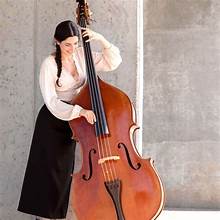
John is a luthier. I like telling people this, but very few people know what a luthier is. One of the people I told was silent for a while before inquiring, “Do you mean, he is a Lutheran?”
I kindly explained, “A luthier is a maker of stringed instruments, which requires a lot of artistic skill. John has made and sold several huge upright bass instruments since he completed his training in Red Wing, Minnesota. When my nephew talks about building them, the wood he uses, the carvings in the wood, you can hear his passion for the job. He works for hours in his workshop to make an instrument produce beautiful music.”
Five lone drinkers dotted the long, polished bar. They were sitting slumped on tall stools, hitched to what I figured were most likely their favorite, and frequently used spots. A few steps from the bar, clusters of tables and chairs ran almost the entire length of the room. Due to the early hour of the evening, not all the places to sit were occupied.
Spotting a shaded bench in the garden, Tammie hurried over to it and quickly sat down before anyone else had the same idea. Slipping off one of her shoes, I noticed a spot on her foot where her shoe had rubbed the skin raw. She sighed with resignation, “Here we go again! The shoes I’m wearing today are rubbing and making my feet hurt, and I didn’t pack any band aids.”
This was our first full day in Seattle, Washington. The day before, my sister Agnes, daughter Tammie and I had done a lot of walking in the airports. Today, we were touring the Chihuly blown glass display and garden next to the Space Needle Center.
After thoroughly searching through her purse, Agnes handed a band aid to Tammie, proudly announcing, “I knew I had one in there somewhere!”
I sat down next to Tammie to apply the band aid for her. Slipping her shoe on again, she stood up, saying with relief, “Now it feels much better! We’re going to stop at a pharmacy to buy a box of band aids before returning to our bungalow for the night.”
I had a hard time following my daughter Tammie and sister Agnes. A river of people surged past market stands displaying everything from honey, jewelry, large bouquets of fresh flowers, meat, candy, fresh fruit, and clothing. Just when I thought I could catch up to them, another group of people intent on reaching a nearby stand stepped between us. Despite it being a weekday, the determined crowd at Pike Street Market reminded me of a strong current of downstream water that I had to swim against to get where I wanted to be.
Pike Place Market in Seattle Washington doesn’t require an entry fee to enter, nor does it have official entry gates. People just flood in through the many entrances from the surrounding neighborhood, or up the steps and elevators from the wharf level stores and the stores on the floors in between. Small stores and shops also line the streets and back alleys outside of the market. Tammie, Agnes and I visited an alleyway tea store and a leather goods vendor.
In all, Pike Street Market District covers nine acres. It is described as Seattle’s largest incubator of small, independent businesses where there are a couple hundred independently owned shops and restaurants. It provides income to over three hundred farmers, entertainers and crafts people and affordable housing for over 450 people.
I finally caught up to Tammie as she was examining skin care items made with honey. Agnes was nearby, looking at earrings. I said, “I wonder if there is a public bathroom nearby?” The friendly shopkeeper nodded and pointed further down the hallway saying, “You’ll find one just beyond the Pike Place Fish Market, then down one floor.”
We stepped off the elevator and looked down. Seattle’s Space Needle has an observation deck with a glass floor near the top of the structure. Through it, we clearly saw the ground below…500 feet below. Heights don’t usually bother me, but when I noticed the floor under me wasn’t stationary, my stomach gave a lurch. Tammie announced, “The top of the space needle turns 360 degrees in an hour.” I nodded to indicate I’d heard her. Agnes nonchalantly walked away from us across the glass floor to get a good spot to look out over the city.
Rejoining us, Agnes commented, “Isn’t there supposed to be a restaurant up here?”
Trying hard to remember what I’d read about the space needle, I squinted as though trying to reread the article from a distance, “I think there were two restaurants. They were closed a few years ago so the space could be remodeled and opened in the future as one big restaurant.”
My daughter, sister and I had arrived in Seattle less than 24 hours earlier. Since then, we made good use of our time by exploring the neighborhood around our bungalow, attending Mass at a nearby church, shopping and finding a wonderful restaurant where we had a relaxing meal. Since today was a Sunday, one of Agnes’ sons and his wife who lived thirty miles east of Seattle, had come to spend the afternoon with us.
I had visited the Seattle Space Needle in 2000 with my late husband Arnie, and Tammie. So many changes had been made to this area that the only thing recognizable to me was the Space Needle, which had been built in 1962 for the world fair held in Seattle that year. All the restaurants, hotels, flower-lined sidewalks, gift shops and the Chihuly Garden and Glass were new to me. The carnival atmosphere that afternoon was supported by food stands selling unusual treats, and a street entertainer playing an electric violin for money thrown into his instrument case.
July 24th 2024, off the shore of New Hampshire, a whale breached, and landed on a 23-foot fishing boat. Two people were thrown from the boat as it capsized. They were quickly rescued.
My daughter stood at the door of the adorable 1920-era bungalow, watching my sister Agnes and me buttoning our coats. The sky was heavily clouded, so the shadowed rooms inside our Airbnb house made us feel like it was earlier in the morning than it really was. Tammie stated, “We need to leave now, if we want to get to Pier 69 in time to go whale watching.”
A slow-moving train made us stop and wait while trying to find a place for us to park. After finding a parking spot in a nearby car ramp, we then had to walk across the railroad tracks. Another train was going through, making us wait some more. We could see the wharf and the boat we would be spending several hours aboard through the gaps between train cars. I nervously glanced at my watch. Tammie assured me, “We’ll get there on time.” There were half a dozen other people waiting with us for the train to pass. I nodded. The only place they could be going was Pier 69, and a tour boat wouldn’t leave so many people behind.
Light rain spattered down from the gray blanket of clouds overhead as we boarded. A cold wind whipped around us. With a shiver, I commented, “Let’s hope there’ll be seating in the enclosed part of the boat. It’s hard to believe that the Midwest is having hot and humid weather this week. I’ve been slightly chilly ever since we arrived in Seattle a couple days ago.”
Most of the seating options on the San Juan Clipper that day were within cabins on two different decks. People who didn’t want protection from the cold wind and possible rain could sit on the open top deck. My sister wondered, “Do you think weather affects a whale watch?”
I answered, “I was wondering that myself. We’ll just have to wait and see. The tour promises guaranteed whale sightings. They have a 97% success rating.”
My daughter Tammie stopped the rental car, and announced, “Here’s the house we will be staying in while visiting Seattle.” I scanned the row of houses lining the street. They were all older homes tightly embraced by shrubs, flowers and bushes that had been planted around them many years ago. The houses looked messy, but cozy, like happy, comfortable homes.
“Which house?” My sister, Agnes inquired from the backseat of our vehicle, a Grand Cherokee Jeep. Tammie motioned to the house alongside the parking spot she’d just backed into. I turned to look and recognized it from a picture that my daughter showed me when making trip arrangements. It looked older and more cluttered than other places we’d looked at, but that was my choice.
Tammie and I were calling this trip to Seattle, Washington, a small trip. Instead of spending an entire day traveling to a faraway place, like Europe, our flight halfway across the United States had lasted roughly, about three-hours. The tiring part of the trip was all the waiting, the treasure hunt search for the right place to check in, the TSA line, the gate our plane was, and hopes there wouldn’t be delays. My travel savvy daughter made doing these things easier.
As we lifted our suitcases out of the Jeep, I thought about how I’d been lugging mine around since leaving home and decided that the word ‘luggage’ perfectly described suitcases. Even when they have wheels, a person must do a lot of lifting and lugging to get them from one place to another.
Hauling my suitcase up the porch steps, I hoped this would be the last lift for the day. The effortless roll of my suitcase was stopped by the threshold. Glancing down, I lifted my wheeled suitcase over the bump and walked through the open entryway into the living room.
Glancing around to take in my surroundings, I breathed, “This place is beautiful!” From watching HGTV, I recognized the house was most likely a craftsman style build around the 1920’s. Other than upkeep, it appeared to never have been remodeled. The floors were wood, and the living room was open through a large arch to the dining room. A built-in buffet sideboard separated the dining room from the kitchen. Off the dining room was a small hallway with a bedroom on either end. Between the rooms was a bathroom. It was small but had everything a person would need.
The highway wound through a valley, over a river, past fields, small hamlets, and many stands of vibrant green trees. Tall, thickly forested baby mountains surrounded us. People were busy riding bikes along the two-lane highway, while others worked in their yards as we zipped past. One of my eardrums suddenly and painfully popped while going up a steep incline and then down again into another valley. The sounds in the car became distorted, as if coming to me from an empty void through a hollow tube. I swallowed hard, trying to make the eardrum pop back to normal.
Several months ago, Tammie and I were reminiscing about the trip to Seattle that Arnie, my late husband, and I took her on in the summer between high school graduation and the start of college over twenty years ago. It was a wonderful trip-a special time that we all treasured. Tammie asked, “Would you ever want to go to Seattle again?”
I didn’t have to think for long. I enthusiastically responded, “Yes, I would!” and added, “You know, three of my nephews live in Washington state. What do you think of this idea: we take Agnes with us? Her sons-John, Karl, and Gary-all live in different cities, but maybe we can coordinate our schedules, and get together.”
Tammie took care of the details. She bought our airplane tickets, arranged for a rental car, found an Airbnb for us to stay at while in Seattle, and then a hotel for while we were in Snoqualmie, where John and his wife Gail live.
When Tammie asked me what I wanted to see while in Washington, one of the things I mentioned was an art museum showing the art and artifacts of indigenous people who lived in the Pacific Northwest long before white men came.
Tammie assured me she’d found an interesting place for us to visit. She said the place we were going to was called the Hibulb Cultural Center. Gail had the day off, and since she was more familiar with the area, offered to drive. Karl came along, too. As we got into the car, my daughter Tammie instructed, “Mom, you sit up front next to Gail. That way you’ll be less likely to feel motion sick. I’ll sit in the back seat with Agnes and Karl.”
Instead of traveling on a main highway, Gail took a beautiful, scenic route. Repeatedly, as we wound through the valleys, turning left and right, up and down, we were treated to grand, quintessential state of Washington vistas: imposing, but distant, snowcapped mountains, which were framed by innumerable smaller peaks in the foreground, and richly covered with pine and poplar trees.
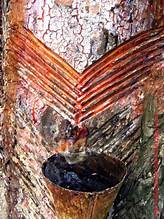
V-shaped notches were used here to tap sap from a pine tree.
A cool breeze entered the living room window and swirled through the room. It had stopped raining a short time ago, so the damp breeze carried the smell of the lilies blossoming in profusion just below the window. Looking up from the comic book I was reading, I reflected upon how cozy it felt to spend a Sunday afternoon with Mom and Daddy like this. My older brothers and sisters were in other parts of the house.
Mom, in her upholstered rocking chair, had one of her favorite woman’s magazines on her lap as she dozed. Daddy sat in the armchair reading the big family bible. Sitting on the linoleum living room floor next to where Daddy sat, I leaned against his legs. An incredible thought suddenly occurred to me: Mom and Daddy had once been children, too!
“Daddy?” I questioned. “What sort of things did you do when you were a little boy”?
Looking up from the bible, he thought for a moment before replying. Glancing down at my bare feet, he said, “I didn’t wear shoes all summer long.” I looked at his face to see if he was joking. I’d taken mine off after coming home from Mass this morning, surely, he wore shoes to attend church! As if reading my mind he explained, “I grew out of the shoes I wore to school during the winter and I didn’t get another pair until sometime after the weather got really cold during the following fall.”
Mom had once told me she and Daddy were in their middle forties when I was born. I counted on my fingers…that made him at least fifty-five years old! “What else do you remember?” I prompted, realizing that his childhood was such a very long time ago.








 Life Lines