The waitress placed a cup of tea on the table in front of me. Vapor from the hot liquid rose and I leaned forward, appreciatively inhaling the comforting scent of black tea. Carefully guiding the cup close to my lips, I realized the tea was as hot as molten lava and set it back down again on the table.
Two young women walked past and sat down in the booth next to mine. Once they were given the Coke they’d ordered, they began to talk about a party one of them had attended. Party girl eagerly confided, “Amy and DJ got into a big public fight at the party. In front of everyone he went, ‘I saw you flirting just now with Matt! Don’t you realize I’m twice the man he is?’ Amy was like, ‘Oh Yeah? You really think you’re something! But I want you to know, you’re no prize.’” Party girl’s friend concluded, “Geez! That sounds like an old married couple fighting!”
The waitress placed the salad I’d ordered on my table and refilled drinks before returning to the kitchen. As I ate, I thought about the conversation I’d overheard and wondered when people had started to use the word ‘went’ instead of the word ‘said’. This has been going on for several years, and it’s easy to fall into. I’ve caught myself using this word myself. Other words people use instead of ‘said’ are ‘goes’, ‘like’ and ‘all’. For example, he ‘goes’, or, he was ‘all’, or, he was ‘like’.
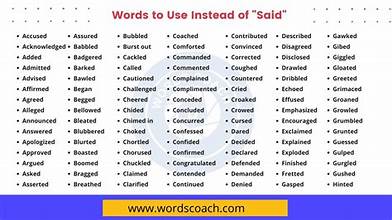
The English language is rich. There are over three hundred words that can be used instead of ‘said’ such as ‘mused’, ‘questioned’, or ‘demanded’. The words ‘went’, ‘goes’, ‘like’ and ‘all’ will probably eventually be added to that list.
 Life Lines