Daylight woke me, but I laid in bed for a long-time daydreaming. The cozy household sounds and the smell of freshly baked bread drifted up from downstairs. Hunger finally made me roll out of bed, get dressed and leave my second story bedroom. When I wandered into the kitchen, Mom turned to exclaim, “Well, you finally decided to get up!”
Slathering a thick layer of butter on a slice of homemade bread, I sat down at the kitchen table. Spring sunshine poured through the nearby window onto the chair I chose and the surrounding floor. The chair’s red vinyl seat felt very warm. I wiggled my toes on the heated flooring. As I ate the bread, I looked out the kitchen window at the lawn. Last week it had been dotted with piles of snow. Today it was starting to turn green.
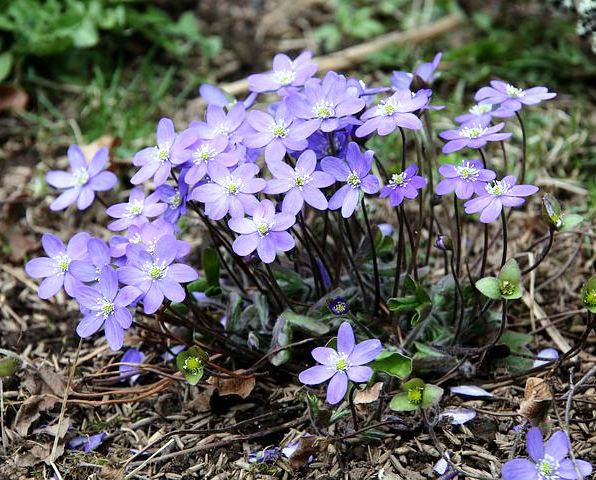
Last Saturday I’d helped Daddy make small trenches in the yard to speed-up mud puddle drainage. Popping the last of the bread into my mouth, I licked a bit of butter off my fingers before asking, “Mom, I’d like to make a May altar. Do you think May flowers have started to bloom? We’ve had lots of April showers.”
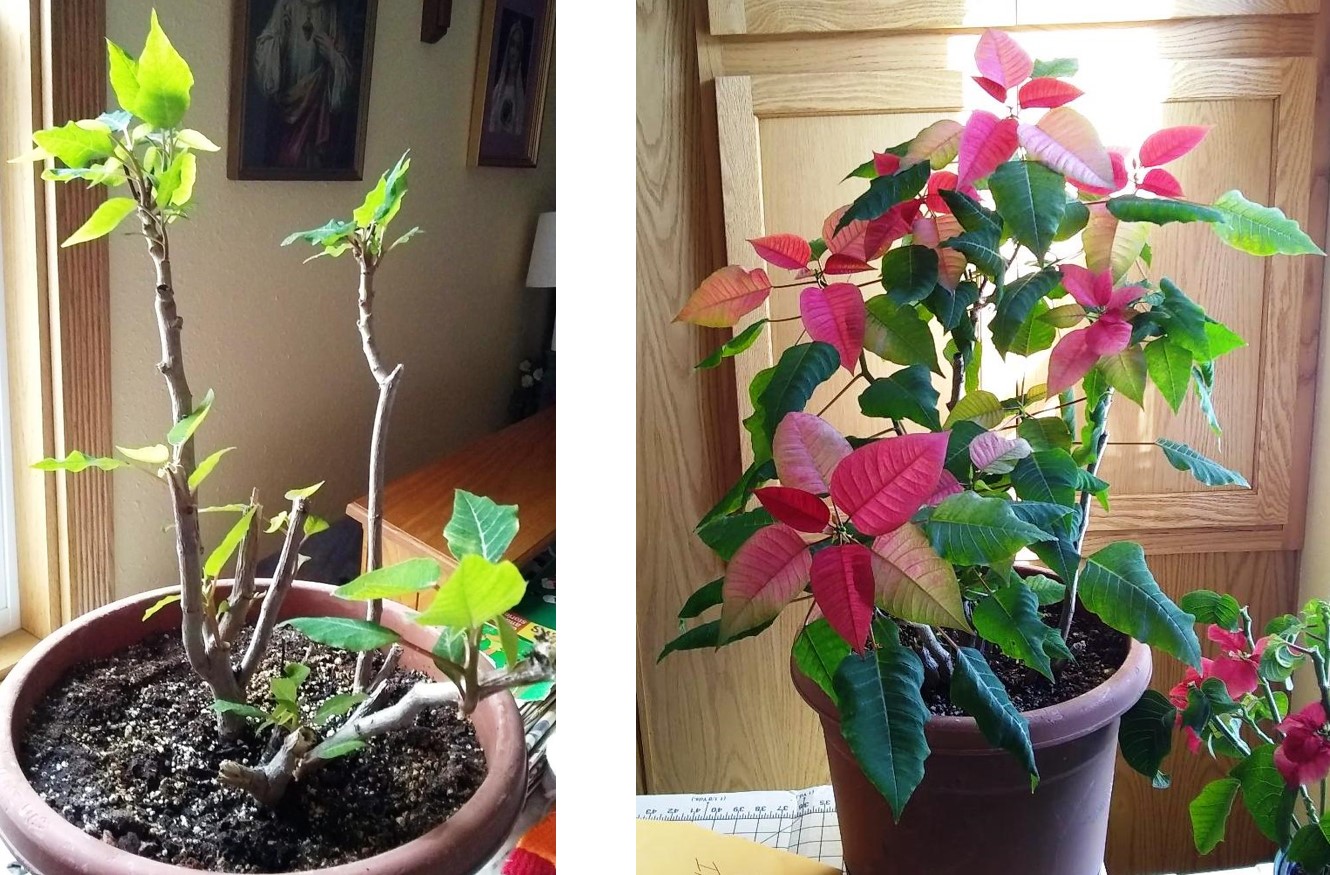
I didn’t bring the poinsettia plant in from the deck one night when we had frost. It lost every single leaf. Knowing it would try to make a comeback, I put it in an upstairs bedroom and watered it. When the first leaves came out, I was very happy. It seems to be happy, too. It has decided to blossom for me in February.
Mom opened the oven door and placed a pan of raw cookies inside. I felt the oven breathe heat into the room. I was sitting nearby at the head of the kitchen table. I reached into a bowl on the table and pulled out a handful of peanuts in the shell. As I shelled them, I popped the pale-colored peanuts into my mouth. They were unsalted.
I stated, “I want salt.” Mom turned from cleaning the cupboard and handed me a salt shaker. Shelling more nuts, I discovered the salt refused to stick to the dry peanuts. I licked them and tried again. This time the salt stuck. An idea popped into my mind. I would shell a bunch of nuts, wet them with water, put them on a small pan and shake salt over them. Then, I’d ask Mom to put the pan in the oven. She wouldn’t let me do it myself, because I was only six-years-old.
Mom agreed to my request and placed the nuts on a small, metal syrup-can lid that she used to test cookies. A few minutes later when she took them out, she instructed, “Wait until they’re cool.”
I grabbed a hot peanut when she wasn’t looking. To my dismay, it was chewy. As if knowing what I’d done, Mom chuckled, “When the nuts are cool, they’ll be crunchy again.” She was right. My roasted, salted peanuts were delicious and I felt clever.
Figuring out on my own how to salt and roast peanuts was the start of my life-long career as an instinctive scientist.
One day when I was eight, I opened my brother Casper’s bedside table drawer to look at the fascinating things he kept in there. There were springs, sprockets, batteries, tubes of industrial strength bubble material, bulbs, coins, bits of wire and string. I began to put the things that fascinated me the most on the table top, end to end. When I placed a wire against the end of a battery and a small bulb against the other end of the wire, I saw a flash of light in the bulb. Flashlights had already been invented, but I was excited to realize I was a re-inventor.
My first grade teacher was a very pretty young nun who reminded me of a nun statue my family had in the living room at home.
I couldn’t take my eyes off the teacher. She was the prettiest and youngest nun I had ever laid eyes on. Although this was my first day of first grade, I was used to seeing the sisters who taught at my parish school. Every Sunday morning when my family went to Mass, we sat two pews behind them.
Since this was our first day of school, most of our parents personally delivered us to the classroom. After they left and the class, with the exception of one sobbing student, settled down. Sister Donna passed out sheets of paper with simple pictures on them. She instructed, “Children, get out your crayons and color the ball and teddy bear.” It was exciting to finally be in school like my big brothers and sisters. Using broad strokes, I colored the ball blue and the teddy bear brown.
Several days into the school year, Sister Donna passed out lined paper for us to practice printing alphabet letters. The papers had widely spaced solid blue lines. Not as easy to see, between the blue lines were faint, light-green, dotted lines. Sister drew lines on the blackboard mimicking the lines on our papers.
Grasping chalk in her right hand, Sister Donna glanced over her shoulder at the class to make sure everyone was looking. “Watch closely,” she demanded, “so you know what needs to be done.” After printing the letters on the black surface, she made a quick tour through the room to make sure the students understood what she wanted.
Satisfied with what she saw, Sister happily complemented, “Very good! Practice printing the letters over and over until they are neat and easy to read. Make the capital ‘A’ look like a tall tent that touches the top blue line and the bottom blue line. Make the lower case ‘a’ nice and round like an apple that sits on the bottom blue line and is no taller than the green dotted line. While you’re working on that, I’ll come around to everyone and help.”
My sixth-grade class milled about noisily in the back of the room, whispering and giggling. None of us were eager for the start of our afternoon classes. Sister stood leaning against the teacher’s desk in front of the room watching us. She finally barked impatiently, “Recess is over, class. Sit down and be quiet!” I knew that tone of voice and instantly obeyed, as did most of the class. True to form, the last students to sit down and be quiet were two boys. As long as I’d known them, since first grade, they stood out as incapable of being quiet or of staying seated for more than a few minutes.
Waiting until the only sound in the room was the occasional clank of the heat registers, Sister picked up a paper from her desk and slowly walked back and forth in the front of the room, grilling the class. “What is the first thing you do when you begin an assignment?”
One student volunteered, “Put on our thinking caps?”
Sisters black veil swished back and forth as she emphatically shook her head and tossed out hints, “We ask you to do it at the top of the page, along with the date. It’s one of the first things you were taught to do in first grade. It helps your teacher grade papers.”
After stepping into the dusty, cobwebbed kitchen I stood still and looked around. I loved snooping around in this house. Doves cooed and fluttered their wings upstairs. My brother Casper had turned the front bedroom into a dovecote. The wonderful, earthy smell of freshly stored oats filled the air. Through the doorway into the living room I saw mounds of plump, golden oat seeds. The dust floating in the sunbeams from this harvest didn’t bother me.
My family had lived in this house until eleven years ago when they built a new farmhouse the year before I was born. Daddy used the old house as his granary. Last week our neighbor Mark had combined our oat field. Before storing the grain in the living room and downstairs bedroom, Daddy had nailed planks over the door between the living room and kitchen, up to my height, to prevent the seeds from spilling into the kitchen.
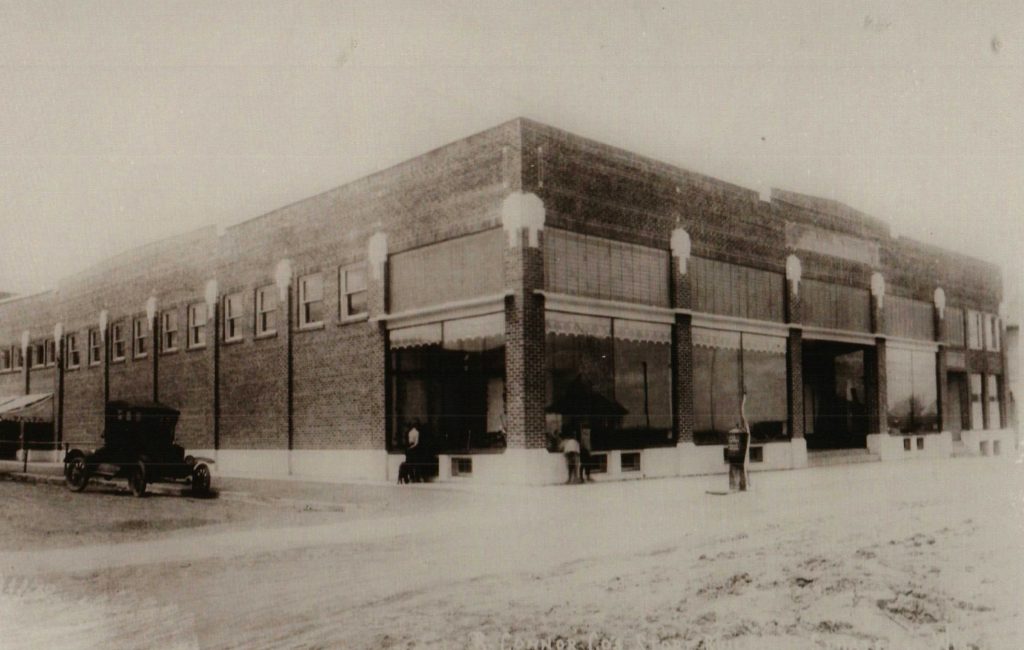
Picture of Davel’s store that accompanied an article on the history of Stratford,Wisconsin, written by Kris Leonhardt for Marshfield News Herald. The large structure was build in 1920 and was destroyed by fire on November 15, 1959.
A classmate squeezed beside me into the school’s main entrance, chattering excitedly about the big fire the night before. We slowly started up the crowded steps towards our third-grade classroom on the second floor. As I listened to my friend, I looked at the beautiful black and white saddle shoes worn by the little girl ahead of us. They looked pretty and I wanted a pair, too.
The whole school was buzzing. The atmosphere reminded me of when heavy snow was falling and we might be sent home early. The excitement and buzzing today wasn’t about a big snowfall, but about our small town’s largest grocery store burning down during the night. Everyone wanted to tell how they had found out or about seeing the disaster in progress.
I had my own story. Last night my family and I had been enjoying a quiet Sunday evening together. The November night was cold and snow covered the ground outside, but my family and I were warm and cozy in the farmhouse. Unexpectedly, one of my big brothers burst into the house and breathlessly announced that Davel’s store was on fire. I felt shocked and frightened. How could that familiar store burn down? I’d been in it many times with Mom. That store was like my own home!
Mom and Dad agreed they wanted to see the fire. It would be amazing because of how big the store was. Davel’s not only sold groceries, but shoes, hardware and household items. The building housed a theater, the post office, an agricultural office, bar and bowling alley. Several families lived in the top floor apartments.
We hastily bundled up and drove the three miles into Stratford. The whole time I sat in the car’s backseat whining, “I’m scared. Don’t go too close to the fire.”
Mom switched on the table lamp next to her upholstered rocking chair and sat down. She said, “Days start getting longer after December 21st, but for the first month each day’s change is only small chicken steps.” Turning to me, she ordered, “Turn on the lamp next to the davenport.” I chuckled. Her description of how slowly days became longer for the first month after the winter solstice always made me laugh.
Outside our warm, well-lit farmhouse, cold winter winds howled as they built snow drifts. I snuggled contentedly against the living room heat register. Mom opened a bag and pulled out a skein of yarn and a crochet hook. I watched with surprise. At fourteen years of age, I’d often seen Mom sew clothing for the family, but this was something new. Curious, I asked, “What are you making?”
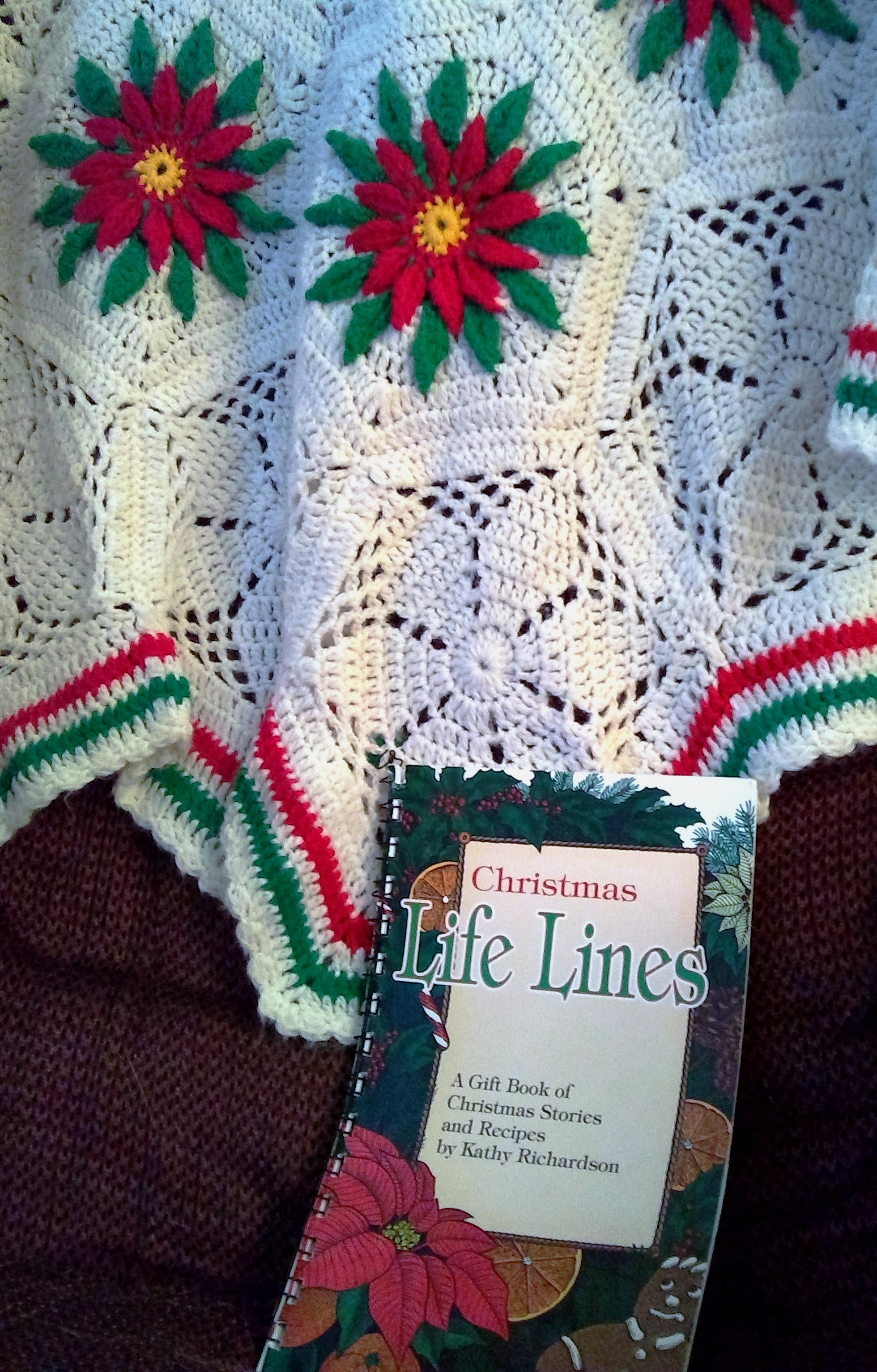
Pulling a small, colorful crocheted block from the bag, Mom proudly explained, “This pattern is called a granny square.” I scooted to her side and took the square from her. It was made with four different colors. Mom happily stated, “I’m going to make a lot more like the one you’re holding and then stitch them together to make an afghan.”
Frowning, I repeated the foreign word, “Afghan?” I didn’t know it at the time, but for the rest of Mom’s life, “afghan” was a part of our family’s normal, everyday vocabulary. She made several afghans for each person in the family, as well as baby blankets, lace collars, slippers and more.
A cold, ice-particle-laden gust of wind swirled down the face of the hospital building, pushing so hard against my body I had to lean forward to make headway. Walking at my side was a coworker, Barb. She commented jokingly, “Here we are, walking through the tundra again.” Some of the ice particles melted on my face while others found their way under my neck scarf. I shivered and put my mitten-clad hand to my frosted forehead, wondering if it was possible to experience brain-freeze from a cold wind.
Barb complained, “Why in the world was this hospital built with a north-facing entrance? We always get a big downdraft in our face just as we get close to entering.”
Through gritted teeth I answered, “I don’t know what the engineers were thinking. But, at least on hot summer days, we get a welcome cool breeze.”
As Barb and I silently walked to the unit where we worked, I thought about Christmas, only two weeks away. I still had some Christmas cards to send, presents to wrap and cookies to bake. Our tree, usually put up a few days before Christmas, wasn’t even bought!
Gold, Frankincense and Myrrh were the gifts brought by the three kings.
Happy excitement coursed through my veins. I couldn’t put a finger on any one thing causing the elevated state of mind, but I knew all the contributing elements. I ticked them off in my mind. One, my family was gathered together in one room, a rare even. This happened only rarely since all my siblings were much older and seldom home together at the same time. Two, they were talking about the upcoming Christmas season. I shivered with delight. Three, we would celebrate the eve of Saint Nicholas in a few days. I looked forward to putting a letter to Saint Nicholas in my cereal bowl at bedtime. In the morning I’d find candy but no letter in it. At school, small brown bags of candy would be left on our desks while we played during the last recess of the day.
The biggest reason for my excitement was the weather. It was snowing. Earlier, I’d heard the grown-ups say this would be the first big storm of winter. My seven-year-old mind could scarcely take in all these wonderful blessings in my life.
Sister Mary Micheline held up the classroom reward jar. I had finally earned a piece of candy. I slid out of my desk and slowly walked to the front of the room. Other second grade students in my class had frequently earned rewards from this jar since school had started this fall. The candy in the jar wasn’t just picked over, it was down to the last treat; one black licorice jelly bean…no one’s favorite candy.
Sister unscrewed the lid and held the jar out for me to reach in. I heard someone in the room snicker. Sister’s face was a map of winkles snuggly wrapper with a white wimple. A large black veil flowed from top of her head and down over her shoulders and back. Grasping the jelly bean, I pulled my arm out of the jar and looked up into the pale blue eyes of my elderly nun. I dutifully recited slowly, “Thank-you Sister Mary Micheline.”
Back at my desk, I looked down at the prize in the palm of my hand and for a second it blurred. In September and October, the jar held many desirable candies. Blinking, I thought, “Daddy loves licorice jelly beans.” Suddenly I felt so much better, I popped the black bean into my mouth. The sweet licorice taste made me feel as if my adored Daddy was sitting right next to me.