My daughter stood at the door of the adorable 1920-era bungalow, watching my sister Agnes and me buttoning our coats. The sky was heavily clouded, so the shadowed rooms inside our Airbnb house made us feel like it was earlier in the morning than it really was. Tammie stated, “We need to leave now, if we want to get to Pier 69 in time to go whale watching.”
A slow-moving train made us stop and wait while trying to find a place for us to park. After finding a parking spot in a nearby car ramp, we then had to walk across the railroad tracks. Another train was going through, making us wait some more. We could see the wharf and the boat we would be spending several hours aboard through the gaps between train cars. I nervously glanced at my watch. Tammie assured me, “We’ll get there on time.” There were half a dozen other people waiting with us for the train to pass. I nodded. The only place they could be going was Pier 69, and a tour boat wouldn’t leave so many people behind.
Light rain spattered down from the gray blanket of clouds overhead as we boarded. A cold wind whipped around us. With a shiver, I commented, “Let’s hope there’ll be seating in the enclosed part of the boat. It’s hard to believe that the Midwest is having hot and humid weather this week. I’ve been slightly chilly ever since we arrived in Seattle a couple days ago.”
Most of the seating options on the San Juan Clipper that day were within cabins on two different decks. People who didn’t want protection from the cold wind and possible rain could sit on the open top deck. My sister wondered, “Do you think weather affects a whale watch?”
I answered, “I was wondering that myself. We’ll just have to wait and see. The tour promises guaranteed whale sightings. They have a 97% success rating.”
Education was an important aspect of the whale watch trip. Overhead announcements told of how many species of whales and other species lived in the Salish Sea. I was confused at first. I thought the coastal waters around the islands west of Seattle were called Puget Sound. The term, Salish Sea, is new. Bert Webber, a professor at Huxley University coined it in 1988. He said it wasn’t to replace the names of Puget Sound, Georgia Strait and the Strait of Juan de Fuca, but to complement them.
Despite the dark, heavy clouds, it never rained more than a few sprinkles. Agnes, Tammie and I enjoyed the boat trip, but all we saw were three seals resting on a buoy. The guide said she saw a spout of water from a whale’s blow hole, but each time it happened, I wasn’t looking in the right place to see it. Later, the guide came around to each of the passengers to show us a portion of baleen from a krill-eating whale. The example she displayed was surprisingly large, and made up of keratin-the same material in fingernails and hair. There are hundreds of them in a whale’s mouth, serving as a food filtration system that screens shoals of krill from ocean water.
As the boat turned to return to Pier 69, the captain of the clipper spoke to us via the overhead system. He apologized for failing to find whales for us to see and promised everyone a voucher for a free whale watch trip to use some other day. The iconic Seattle skyline with the space needle stood out against a backdrop of bright blue storm clouds as we entered the harbor. The view was breathtaking! I didn’t feel bad about not seeing whales.
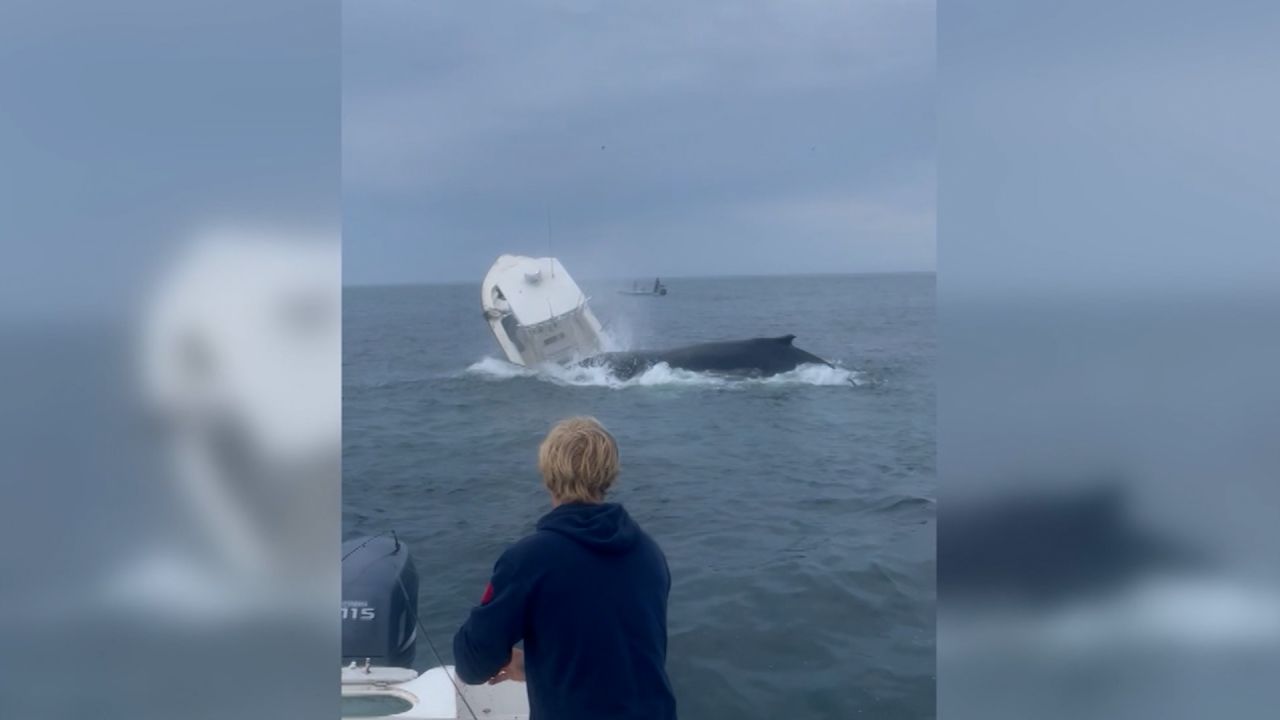
Shortly after we arrived back in Wisconsin from our Seattle vacation, I saw a news report telling of a whale that breached in the waters off New Hampshire, landed on a 23-foot fishing boat, and made the boat capsize. I told Agnes and Tammie, “Some blessings are unseen. We didn’t see a whale, but if I had the choice between seeing a whale capsize the boat I was on or not seeing any whales…I prefer to not see whales.”
 Life Lines