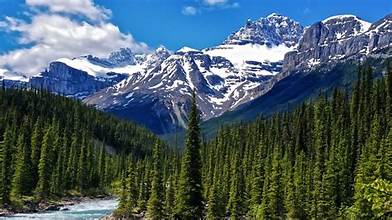
The highway wound through a valley, over a river, past fields, small hamlets, and many stands of vibrant green trees. Tall, thickly forested baby mountains surrounded us. People were busy riding bikes along the two-lane highway, while others worked in their yards as we zipped past. One of my eardrums suddenly and painfully popped while going up a steep incline and then down again into another valley. The sounds in the car became distorted, as if coming to me from an empty void through a hollow tube. I swallowed hard, trying to make the eardrum pop back to normal.
Several months ago, Tammie and I were reminiscing about the trip to Seattle that Arnie, my late husband, and I took her on in the summer between high school graduation and the start of college over twenty years ago. It was a wonderful trip-a special time that we all treasured. Tammie asked, “Would you ever want to go to Seattle again?”
I didn’t have to think for long. I enthusiastically responded, “Yes, I would!” and added, “You know, three of my nephews live in Washington state. What do you think of this idea: we take Agnes with us? Her sons-John, Karl, and Gary-all live in different cities, but maybe we can coordinate our schedules, and get together.”
Tammie took care of the details. She bought our airplane tickets, arranged for a rental car, found an Airbnb for us to stay at while in Seattle, and then a hotel for while we were in Snoqualmie, where John and his wife Gail live.
When Tammie asked me what I wanted to see while in Washington, one of the things I mentioned was an art museum showing the art and artifacts of indigenous people who lived in the Pacific Northwest long before white men came.
Tammie assured me she’d found an interesting place for us to visit. She said the place we were going to was called the Hibulb Cultural Center. Gail had the day off, and since she was more familiar with the area, offered to drive. Karl came along, too. As we got into the car, my daughter Tammie instructed, “Mom, you sit up front next to Gail. That way you’ll be less likely to feel motion sick. I’ll sit in the back seat with Agnes and Karl.”
Instead of traveling on a main highway, Gail took a beautiful, scenic route. Repeatedly, as we wound through the valleys, turning left and right, up and down, we were treated to grand, quintessential state of Washington vistas: imposing, but distant, snowcapped mountains, which were framed by innumerable smaller peaks in the foreground, and richly covered with pine and poplar trees.
The Hibulb Cultural Center is located on the Tulalip Reservation in Snohomish County in Washington. It was built and opened in 2011. I walked into the building still rubbing my ears. Nothing sounded right to my elevation-popped ears.
A canoe made from the trunk of a huge tree was on display in the main hall. Tribal members had fished in the ocean using it. It was a large canoe, but small compared to the might of the ocean. What bravery it must have taken for the men to go out in it! In a recreated longhouse, we watched a short video on how the Native Americans had lived in them and the importance of their lifestyle. Another gallery showed many Pacific Northwest Native Americans who fought in World War I and II.
The displays that touched me the most, showed what happened after the indigenous people signed treaties with the white men. All the tribes were forbidden to speak their languages or practice their ceremonies. The indigenous children were sent away to boarding schools to be forced to forget their traditions. Feeling confused, I asked Tammie, “Why did the white men do that to these poor people? Our identity lies in our language, culture, faith and traditions.”
For almost 80 years the Indians heritage was suppressed by law. Surprisingly, it has been only since 1990 that the ban was lifted. Now, the tribes of the Pacific Northwest are working hard to bring back their native tongue and heritage. I commented to Tammie, “Wouldn’t you think the language would be lost and gone forever after that many years?” But that wasn’t the case.
Graphs and interactive tools showed that more than a dozen Pacific Northwest indigenous languages have been identified and pulled together to be used again. Amazed, I turned to my daughter and exclaimed, “I think clan elders must have done a lot of whispering into their grandchildren’s ears. How else could the language been saved after that many years?”
That afternoon as we drove home, I kept thinking about the children at the boarding schools who were punished for acting and speaking in the ways that they had been raised. Another change in elevation made my ears pop again, making it hard for me to hear the conversation in the car.
I thought, “The white men who stopped the indigenous people from speaking their languages had hearing problems, too. Filled with an overabundance of righteousness, they refused to recognize the Native American’s innate dignity, merely because they were different than themselves and had resources they wanted.”
 Life Lines